Christopher Nolan has probably answered thousands of questions about his movies. Ask him about cameras, casting choices, practical effects, or giant film formats, and the acclaimed director likely has a polished answer ready to go.
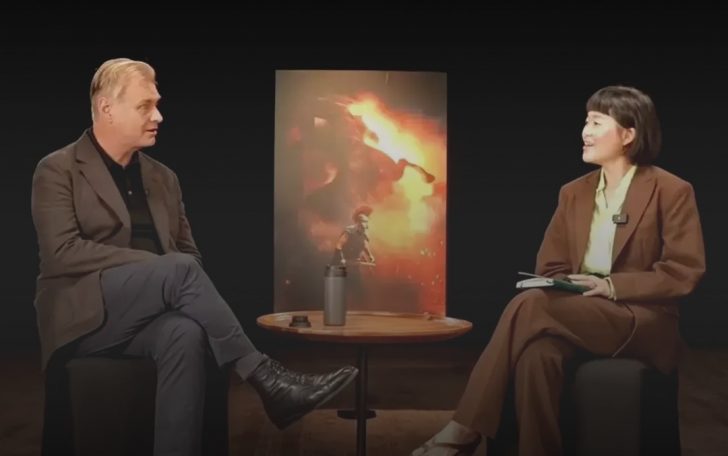
However, Chinese podcaster and scholar Zhong Shu tried something very different. During Nolan’s Beijing press tour for “The Odyssey,” she skipped the usual promotional questions and pushed the filmmaker toward subjects such as civilization, heroism, faith, atonement, and Homer.
The result became a surprise global hit. Clips and reposts of the conversation attracted millions of views across Western social media, with viewers praising the interview for making Nolan stop, consider the question, and develop his answer in real time. Shu shared a glimpse of the "Are you a bard for a civilization at dusk" interview on X. The video amassed 7 million views in no time.
Here is my interview with Christopher Nolan: are you a bard for a civilization at dusk? pic.twitter.com/dQION5v6bl
— Yiyang Zhuge (@ZhugeYY) July 31, 2026
That reaction also raised an interesting question. How does an interviewer get a powerful, heavily media-trained person to stop repeating familiar answers and start saying something worth hearing? Zhong’s method offers a surprisingly simple answer to that.
Zhong Shu Did Her Homework Long Before Nolan Arrived
Dazed China / IG / A Chinese employee at Universal Pictures encountered an episode of Zhong’s podcast in which she discussed how to understand Homer’s “Odyssey,” the ancient Greek epic behind Nolan’s new film.
That connection led to an invitation to interview Nolan during his promotional visit to Beijing. Zhong originally hoped for 45 minutes to an hour, which would have allowed a long discussion about the text and Nolan’s interpretation.
The reality of Hollywood publicity quickly arrived. Nolan’s publicist gave Zhong only about 15 minutes, although the final conversation reportedly stretched to roughly 17 minutes.
For many entertainment reporters, that schedule would demand fast questions designed to produce short, usable quotes. Zhong approached the situation more like an academic conversation after a lecture. She had an important advantage because her research did not begin when Universal called. Zhong had studied ancient Greek literature and Homer’s “Odyssey” since she was 15, giving her years of knowledge to draw from.
That background allowed her to avoid basic questions that Nolan could answer almost automatically. She did not need to spend precious minutes asking what attracted him to the project or what filming had been like. Instead, she went directly to the ideas underneath the movie. One striking question compared Nolan to a modern bard and asked if adapting Homer made him “a bard of a civilization at dusk.”
Great Questions Give Powerful People Somewhere New to Go
Zhong’s biggest lesson for interviewers is not to chase a viral quote. Powerful people usually have enough media experience to recognize that tactic immediately, and many have prepared responses designed to avoid it. A better question gives the guest an interesting problem to solve. It should connect directly to their work while approaching it from an angle that feels fresh enough to demand genuine thought.
Zhong accomplished that by treating Nolan less like a celebrity and more like an intellectual conversation partner. She has said she approached the interview much as she would speak with a professor or academic after a lecture.
That changed the tone immediately. Nolan was still promoting “The Odyssey,” but the conversation was not trapped inside the usual boundaries of a movie press tour. Zhong also resisted the temptation to prove how much she knew. Her knowledge gave her questions depth, but the questions still left enough space for Nolan to disagree, explain his thinking, or take the conversation somewhere unexpected.
Specific questions create productive pressure. Asking about atonement, civilization, or the religious interpretation of an ancient text gives the speaker a clear subject while leaving the answer open. The interview also shows why listening matters as much as preparation.
Why the Christopher Nolan Interview Went Global
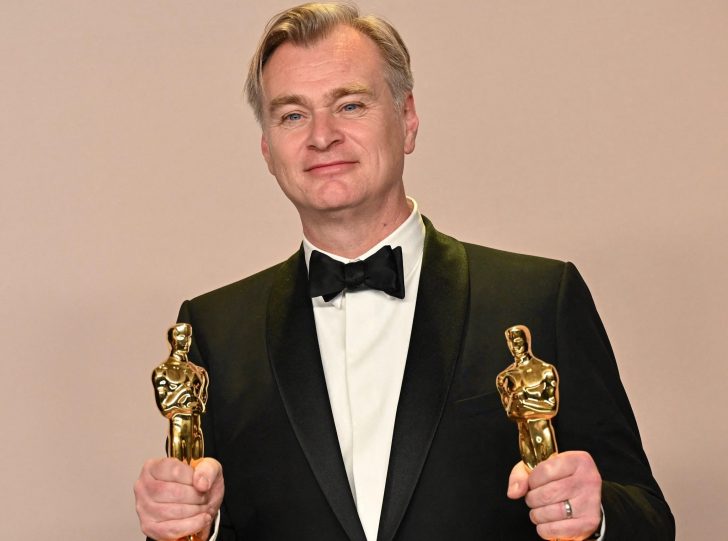
Nolan / IG / Zhong initially released the conversation on Chinese video platform Bilibili. It attracted attention there, but the interview soon escaped its original audience and began circulating much more widely overseas.
Canadian video game journalist Geoff Keighley helped boost its international reach after sharing the interview on X and describing it as fascinating and smart. Clips and discussions then spread across YouTube, X, Reddit, and other online spaces.
The response became bigger than another piece of publicity for “The Odyssey.” Viewers began comparing Zhong’s questions with the familiar celebrity interviews that dominate modern entertainment coverage. That comparison exposed some frustration with promotional journalism. Audiences regularly see actors and directors answering nearly identical questions across dozens of interviews during the release of a major movie.