
The world has lost one of its most distinctive artistic voices. Marjane Satrapi, the Iranian French cartoonist, filmmaker, and outspoken advocate for women’s rights, has died at the age of 56. Her death was confirmed by the French presidency on June 4, 2026, prompting tributes from political leaders, artists, and admirers around the globe.
According to a statement from her family and close friends, Satrapi passed away a little over a year after losing her husband, Swedish film producer and actor Mattias Ripa. The statement described her death in heartbreaking terms, saying she had "died of sadness" following the loss of the man she once called the love of her life.
The Journey from Revolutionary Iran to International Acclaim
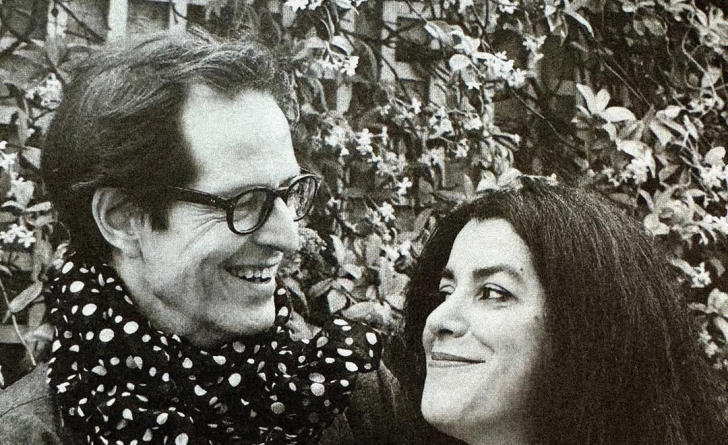
GTN / Marjane Satrapi was born on November 22, 1969, in Rasht, Iran. Her childhood unfolded during one of the most turbulent periods in the country's history.
The Iranian Revolution and the Iran-Iraq War shaped her early years and later became the foundation of her most celebrated work.
When she was a teenager, her parents sent her to Vienna in 1983. They hoped to shield her from the growing extremism that followed the revolution. Life in Austria proved difficult. Satrapi often spoke about feeling isolated and out of place. After several years abroad, she returned to Iran and studied visual communications at Tehran University.
Her time back home deepened her understanding of identity, culture, and displacement. Those experiences became recurring themes throughout her career. In 1994, she moved to France, where she would build a life, establish her artistic voice, and eventually become one of the country's most respected cultural figures.
Satrapi's breakthrough came with the publication of "Persepolis," a graphic memoir released between 2000 and 2003. Told in striking black and white illustrations, the story follows her childhood in Iran and her experiences growing up between two worlds.
The graphic novel connected with readers far beyond France and Iran. It offered an honest, personal view of political upheaval while remaining funny, emotional, and deeply human. For many readers, "Persepolis" became their first real glimpse into everyday life in post-revolutionary Iran.
The Artist Changed Graphic Storytelling
The success of "Persepolis" transformed Satrapi into an international literary star. Yet she never stopped experimenting with new forms of storytelling. Her work consistently challenged assumptions while making complex subjects accessible.
In 2007, she co-directed the animated film adaptation of "Persepolis" alongside Vincent Paronnaud. The film became a major critical success and earned widespread praise for preserving the spirit of the original graphic novel.
The movie won the Film Critics Grand Prix at Cannes and received a César Award for Best Adapted Screenplay. It also earned an Academy Award nomination for Best Animated Feature. That nomination marked a historic moment, making Satrapi the first woman ever shortlisted in the category.
Her creative range extended well beyond a single project. She wrote acclaimed graphic novels, including "Embroideries" and "Chicken with Plums." The latter was later adapted into a feature film, further showcasing her ability to move between mediums with ease.
As a filmmaker, Satrapi continued to surprise audiences. Her dark comedy "The Voices," starring Ryan Reynolds, revealed a completely different side of her storytelling style. Later, she directed "Radioactive," a biographical drama about Nobel Prize-winning scientist Marie Curie, starring Rosamund Pike.
A Fearless Voice for Freedom and Women's Rights

E News / Throughout her career, Satrapi refused to be confined by expectations. She moved comfortably between comics, film, literature, and public activism.
While Satrapi gained fame through art, her influence stretched far beyond books and movies. She became one of the most recognizable voices speaking out against oppression in Iran and defending women's rights worldwide.
She never hesitated to criticize Iran's ruling establishment. Her comments were often direct and uncompromising. Following the protests sparked by the death of Mahsa Amini in 2022, Satrapi described the movement as the world's first feminist revolution.
In 2023, she coordinated the collaborative book "Woman, Life, Freedom." The project brought together artists, academics, and writers to document the protests and highlight ongoing human rights concerns in Iran.